




EEOC complaints are at an all-time high.
U.S. employers were hit with 99,947 charges of discrimination in 2011 and forced to pay out $364.6 million – the highest ever in the EEOC's 46-year history. And the trend is going to get worse. There has never been a better time to review policies and train your managers.
But here's the problem:
Good managers know not to discriminate. But different people view interactions differently and people have become so sue-happy even the best managers can find themselves on the wrong side of a complaint.
Thing is, it's not the complaint that ensnares most employers – it's how they react to it. The penalty and reputation hit that your organization can take from inaction, inappropriate response, lack of cooperation and other simple missteps is more than costly.
When a complaint happens, will you and your managers know how best to respond?
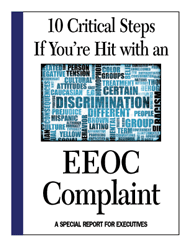
| The Solution: | "10 Critical Steps If You're Hit with an EEOC Complaint" |
Discrimination Complaints – Best Practices in 30 Minutes
- How a bias complaint typically ends up at your doorstep
- Ins and outs of the EEOC's 4-step complaint process
- 2 options employers have when an EEOC complaint is filed
- How often are complaints valid? See these statistics
- The key aspect that saves time, money and headaches during the complaint process
- Disciplining or terminating a complainant: What to watch out for
Jammed with best practices, detailed information and practical advice, this fast-read executive report gives you exactly what you need to handle EEOC complaints with confidence and avoid costly missteps.
The 10 Critical Steps to Take When You're Hit with an EEOC Complaint
Reviewing and acknowledging the complaint
Preserving all documentation
Avoiding retaliation
Communicate carefully: 3 keys
Getting an attorney
Conducting an internal investigation: 5 elements
Cooperate with the EEOC investigator: 3 points to consider
7 steps to craft an effective position statement
Conciliation: Your last chance to avoid a trial
3 steps to prevent future EEOC complaints
"10 Critical Steps If You're Hit with an EEOC Complaint" is a clear, straightforward guide you can use not only when you're slapped with an EEOC complaint, but before to train staff so they are prepared if and when a discrimination complaint does occur.
This report identifies 10 steps employers should take after a complaint charge is filed, including how to conduct an internal investigation, the best way to cooperate with the EEOC, and tips for drafting a solid position statement.
All of which will keep a bad situation from getting exponentially worse.