


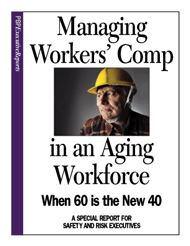


Special Executive Report
Managing Workers' Comp in an Aging Workforce
Baby Boomers are putting off retirement and as they gray they present new workers' comp challenges for employers.
Yes, they're more safety-conscious and have fewer injuries, but when they do get injured, the recovery time is longer and the costs to companies are significantly higher.
The best organizations have learned how to embrace older workers' experience and safety-first attitudes and use them to combat the safety risks they present. Here's 13 proven ways your organization can too:
| The Solution: | "Managing Workers' Comp in an Aging Workforce" |
Managing comp as your workforce gets older
- 13 ways to prevent costly injuries at your organization
- Accommodations you can make without disrupting productivity
- Work-related injury or not? Here's help making the call
- Overcome the No. 1 safety concern affecting older workers
- Return-to-work programs that fit aging workers' needs
Jammed with proven strategies and examples, this fast-read executive report gives you actionable tactics you can use today to manage workers' comp costs as the workforce grows older.
Keys to keeping aging workers safe and healthy
- Using older workers' experience to improve safety
- Basic safety measures that prevent slips, trips and falls
- Helping workers stay alert as reaction time slows down
- Alleviate the risks of reduced vision in the workplace
- 5 ways you can reduce stress on older backs
"Managing Workers' Comp in an Aging Workforce" is filled with effective techniques and proven strategies that address the typical effects of aging and precautions to take to maintain a safe and cost-effective working environment.
Minimize risks to avoid injuries and comp claims
- Matching age of workers to jobs where they can excel
- The 7 physical areas older workers are most vulnerable
- Fostering a culture that reinforces their cautious attitudes
- 5 case studies that help sort through how to handle claims
- Proving you're not at fault for injuries caused by aging