


Special Executive Report
The Importance of Leadership to Successful Safety Programs
Every successful safety program must remember to include two crucial areas: leadership and culture. Without them, programs stocked with the latest safety gear and machine guards are likely to fail. This executive report gives you everything you need to know to prevent this: create a successful safety culture, get buy-in from the top down, leadership from the bottom up and an injury-free workplace for all. Take a look:
Improving safety programs at any workplace in 30 minutes:
- Create successful safety programs: 4 ways that work
- Powerful personal examples of safety leadership from real execs
- Culture vs. climate and their impact on safety
- 8 biggest mistakes companies make when promoting safety
- No. 1 sign of a toxic workplace culture – and how to avoid it
Building leadership to achieve success:
- Effective ways to get frontline supervisors to step up as leaders
- Measure leaders' personal safety ethic: 7 checkpoints that work
- Gaining leadership and commitment from top decision-makers
- Identify and remedy gaps in leadership and culture
- Effectively get out the message that safety is a priority
Behaviors and beliefs of successful safety cultures:
- Utilize positive reinforcement to promote safety in any situation
- 9 factors that promote and provide a thriving company culture
- Surefire ways to build safety into the production process
- Single most important factor in any safety culture and how to achieve it
- No. 1 predictor of your organization's safety performance
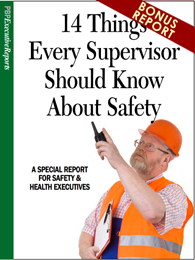
14 Things Every Supervisor Should Know About Safety
Order "The Importance of Leadership to Successful Safety Programs" today and get this free bonus report.
Inside this free bonus report, you'll discover:
- Risk assessments that spot and eliminate hazards before they turn into tragedies
- Regulations, policies and procedures that'll keep you safe from OSHA violations
- Unintended consequences of promoting your best workers – and how to overcome them
- Confront and correct at-risk behavior – even when difficult people are the offenders
- Negative effects of incentive programs and better rewards to replace them with
$99 value
Click the "BUY IT NOW" button below and get
this bonus report at no additional charge
Buy it now

